
Lesson letter
Classquest duration: 45 minutes
Target audience: Ages from 8 to 12
In this class quest students experience how difficult it can be to estimate when and with whom you do or do not share information, photos or videos (online). Through this quest, including an experiment in the classroom, students will discover the consequences of sharing that information. They will also learn why they should think carefully about what others could do with that information. We consider the fact that everyone has different wishes and limits when it comes to putting and sharing photos and videos online. It is important to put yourself in someone else's shoes, and to take into account that that particular person may be in a very different position. Think before you post.
Learning goals
Students…
- learn why it is important to act carefully on social media
- learn the risks of sharing personal information on (social) media
- become aware of the pros and cons of social media
- think about when information is unwanted and know who to discuss it with
Link to DigComp*
- D4 safety, wellbeing, and responsible use
*DigComp (the Digital Competence Framework for Citizens) is an EU framework that describes the digital skills people need to use technology confidently, safely, and responsibly. For primary school teachers, it provides a clear reference for helping children learn basic skills such as finding information online, creating simple digital content, staying safe on the internet, and behaving respectfully in digital environments. DigComp supports a shared European understanding of what “being digitally competent” means at different ages.
Necessities
- Interactive board
- Create an account here in advance. If you want to practice a quest beforehand, click ‘practice’ at the start. This takes about half an hour.
Glossary
- Personal data/information: all information about somebody or which can be traced back to a particular person. For example: your age, place of residence, address, telephone number, but also photos of yourself.
- Consequences: a result that comes from something else (the cause). For example: a consequence of not eating can be that you are hungry, and a result of not sleeping that you are tired.
The lesson
Introduction - 10 min
Tell the students that you are going to talk about sharing (online) information with each other such as messages, photos or videos. You will then play a game about this with an experiment in it.
Introduction Questions
- Nowadays we send a lot of photos, videos and stories to each other. It's great that we can share that so easily! However, do you ever think about the consequences that sharing a photo or video can have? What could those consequences be? Optionally, create a word spin on the smartboard with students' answers. Example: As soon as you share something, you no longer have control over what happens to it. Others can then decide what to do with your photo or video. For example, they can forward it, edit it or save it on their phone or computer. That can also turn out to be annoying if it's something you didn't want to end up with everyone.
- Do you ever ask for permission when you put a photo of someone online?
- Do you like it when someone asks you for permission first?
- What do you not share from others? When are you crossing the line? Example: A photo in which someone is embarrassed, or with little clothes on, or is intimate with someone else. But above all: I never share something if the person on it doesn't want it. Whatever can be seen. Limits differ per person.
- When is someone not allowed to just put something of yours online? What is your limit? Here it will be nice to point out the differences within the answers of students. One is fine with almost everything, while the other has much clearer boundaries when it comes to putting photos and videos online.
Core - 30 min
Start the quest on the interactive whiteboard. Announce that you are now going to start the experiment and the game. Also immediately discuss the rules that suit your class when you play a game on the IWB as a class.
Interactive experience
This quest focuses on an interactive experience. During the experiment, students experience that it can be difficult to estimate with whom you can share something, and with whom you cannot. A number of students in the class have to pretend to be a spy. The aim of the experiment is that the spies are not allowed to find out the secret word. In the quest, the secret word is shared with one student, called the start player, and then whispered through all students, also known as Agents. The experiment is played twice, the first time the spies are known and the second time not. The course is therefore different! Further explanation follows below.
Run experiment (as also mentioned step by step in the quest)
Round 1
You (the teacher) will choose a student as the starting player. He/she comes forward and may think of a secret word, but not say it out loud. Then you choose a number of students who are the spies . The whole class knows who these spies are. The rest of the class start as Agents.
Now the secret word must be whispered around the classroom. But of course the spies can't hear it. The starting player chooses a confidant (knowing that it is an Agent) and whispers the secret word in his/ her ear. The starting player then sits down on the floor after this action. The confidant then does the same. And chooses another confidant, whispers the word in his/her ear, and then sits down. This continues until all Agents are seated. Everyone should know the secret word, except the spies. Top!
Round 2
This round is almost the same, but now the spies are invisible. A new starting player steps up to the board and chooses a word, just like in round 1. But now everyone in the class has to close their eyes, and the teacher secretly taps a number of children. These children are now the spies. If you're a spy, it's important that you just sit there in round two and don't say anything. Like a real spy! Then the game proceeds the same.
Important: As a spy, if you get the word whispered in your ear (which the chance is very high) you can shout the word around the class (a metaphor for public sharing or leaking of information/data) and the experiment is immediately over.
Questions to the class in the quest
The questions below can be asked . You can of course prepare them in advance and have possible answers ready.
- What do you think we learned from this experiment? Possible answer: It can be hard to know who to trust when it comes to online sharing.
- Would you send this photo to your friends? Raise your hand if you'd share this. Who is part of the majority?
- What do you think of this friend posting a photo on Instagram like this?
- What are the comparisons to the experiment we just did? Possible answer: that it is sometimes difficult to know who you can trust.
- So it is better never to share anything again? Raise your hand if you agree! Discussion suggestions: ask questions; Why? And; who agrees/disagrees?
- What else could Emily have done? Discussion Suggestions: Emily could have said that she doesn't want this photo to be online, and that it's for friends only. She could also have made herself unrecognizable by cutting off her head or blurred it..
- What could Emily have done if she wanted to share this photo but didn't want anyone to recognize her? Possible answer: She could have made herself unrecognizable in the photo. For example, by cutting or covering her head from the photo.
- The last girlfriend probably didn't do it on purpose, but what could she have done better before sharing the photo on Instagram? Possible answer: This friend should have asked Emily first.
Closing - 10 min
Ask the students what they have learned.
Final questions
What do you expect from someone when you send them something “in confidence”? Example: That the person treats it with respect. This means that the person will not forward that photo or video or post it anywhere online without your permission
Statement: Anyone can put photos of me online without asking permission, I don't care how I look on them.
Possible answers:
- Pros: You trust that no one will do anything bad with it. You don't feel ashamed and don't care much about what others think of you.
- Cons: The thing is, you have no control over what's going to happen to those photos or videos and whose hands it ends up in. If it is edited, used or shared with the wrong intentions, you don't know what the consequences will be for your feeling, image or future work. Consciously think about what you can or cannot put online.
Statement: I never ask my friends if I can share their photo online, I know I can.
Answers:
- Pros: My friends have told me before that I can always share our photos online, so I don't have to ask for it every time. I can also judge for myself when someone is embarrassing or not.
- Cons: Still, it can differ per photo whether a friend would also put it online. Opinions and boundaries can change. If everyone is nice and smiling on it and has previously given permission for online posting, then it is possible. But with photos in which someone is a little crazy or funny, I prefer to check whether it's okay to post.
Tips
- To add a dynamic touch, consider having students take turns reading the text, making the experience even more engaging.
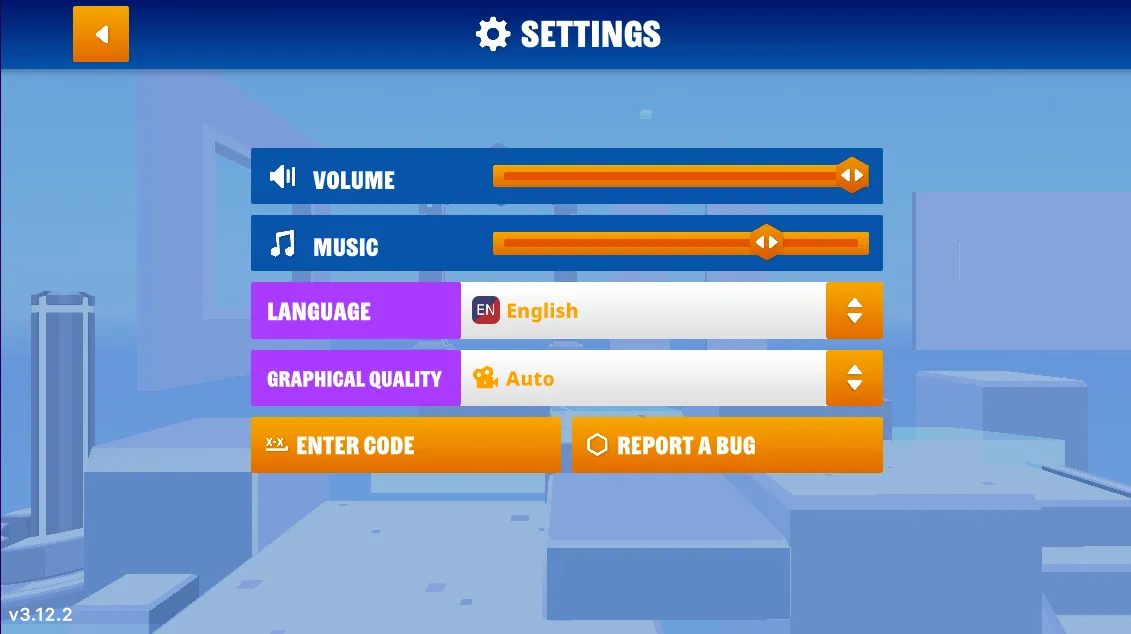
- If you prefer a silent quest, you have the option to turn off the sound. Simply navigate to the game's options menu, and you'll find the accompanying images on the right.
- Now, let's dive into the heart of our quest! Navigate to the game’s options menu where you can turn off the music.
Learn more
- Have students talk to their parents about sharing photos.