.png)
Lesson letter
Classquest duration: 45 minutes
Target audience: Ages from 8 to 12
In this classquest, students experience what it is like to be faced with the choice of going the wrong way or the right way. They become an ethical hacker or black hat hacker! They are taken through the story by Kimi Klepto. Kimi is on her way to an observatory to watch stars and satellites. She has agreed with her sweetheart that she would call her if she saw a shooting star. When that happens and she tries to video call, she has no access. But she won't let that happen to her. She goes to hack the satellites to make sure she restores her own connection. Then someone arrives to present her and the class with a choice: Do you go through with your plan or make sure you have permission to help others as well when you hack?
Learning goals
Students...
- have formed an opinion about what constitutes right or wrong action online.
- know what (ethical) hacking is.
- know what a Black Hat, White Hat (ethical hacker) and Grey Hat hacker is, and what the differences are.
- know where to go if they have ethical hacking talent (or see it in classmates) and how they can use it to contribute to a better world.
Link to DigComp*
- D1 information search, evaluation, management
- D2 communication and collaboration
- D4 safety, wellbeing, and responsible use
*DigComp (the Digital Competence Framework for Citizens) is an EU framework that describes the digital skills people need to use technology confidently, safely, and responsibly. For primary school teachers, it provides a clear reference for helping children learn basic skills such as finding information online, creating simple digital content, staying safe on the internet, and behaving respectfully in digital environments. DigComp supports a shared European understanding of what “being digitally competent” means at different ages.
Necessities
- Interactive board
- Create an account here in advance. If you want to practice a quest beforehand, click ‘practice’ at the start. This takes about half an hour.
Glossary
- Ethical Hacking: ethical hacking means that someone, with permission, attempts to break into a computer system to find weaknesses. They do this so that the owner of the system can fix these problems and be better protected from real attacks by malicious hackers. So ethical hackers work to make us all safer on the Internet.
- White Hat Hacker: this is an (other word for) Ethical Hacker.
- Grey Hat Hacker: a Grey Hat hacker is between ethical (White Hat) and malicious (Black Hat) hackers. They hack systems without permission, but usually do so with good intentions, such as finding and reporting security problems. Although their actions are sometimes illegal because they operate without permission, they are not trying to do damage or steal information for personal gain.
- Black Hat Hacker: a Black Hat hacker is someone who illegally breaks into computer systems with the intention of causing damage, stealing data or for personal gain. They do not have permission to hack the systems and their actions are often harmful and criminal. Black Hat hackers are motivated by financial gain, personal interests or simply the challenge of hacking.
- Handshake: a handshake is like a friendly handshake between two computers. They first say hello and agree on how they will talk to each other before actually sending data.
The lesson
Introduction - 10 min
Tell students that you are going to talk about ethical hacking. We are increasingly online, so there are also more and more online "bad guys/thieves." These are the Black Hat Hackers. But fortunately, there are lots of adults as well as children who are doing good things with their hacking talents.These are the White Hat Hackers (Ethical Hackers). But when do you do it right and when not? That's what this quest is about.
Introductory questions
- What do you think is the difference between a "good" hacker and a "bad" hacker? Possible answer: A good hacker protects systems, while a bad hacker damages or steals information.
- What would you do if you discovered a flaw in a computer game that could give an unfair advantage to others in the game? Possible answer: If I discovered a flaw, I would tell the creators so they could fix it.
- Do you know examples of good hackers from movies, books or TV series? Possible answer: Yes, I know good hackers from movies like "Wreck-It Ralph" and TV series like "Cyberchase.
- How would you explain to someone what an ethical hacker does? Possible answer: An ethical hacker helps companies and people by, with permission, finding and improving vulnerabilities in their systems.
- Do you know anyone in the class who could become a hacker?
Core - 30 min
Start the quest on the Interactive Whiteboard. Indicate that you are now going to start the game.
Also directly discuss the rules appropriate for your class when playing a game on the Interactive Whiteboard.
During the lesson, several puzzles will be presented. You can find these puzzles and their answers in the appendix. These puzzles can be printed out and handed out when asked for in the quest but can also be solved from the Interactive Whiteboard.
Closing - 10 min
Some questions to check for learning objectives:
- Can you explain what an ethical hacker does? An ethical hacker helps companies by testing and improving their systems to make them more secure.
- Why is ethical hacking important? Ethical hacking is important because it helps protect our data and systems from malicious hackers.
- What is the difference between a Black Hat and a White Hat hacker? A Black Hat hacker hacks to cause damage or steal information and without permission, while a White Hat hacker hacks systems to secure them and with permission..
- Can you give an example of what a Grey Hat hacker does? A Grey Hat hacker hacks without permission but with good intentions, such as finding security vulnerabilities and reporting them without causing damage.
- Where can you go if you want to learn more about ethical hacking? You can take online courses, join a hacker space or find a mentor to guide you
- How can ethical hacking help make the world a better place? Ethical hacking can help protect businesses and individuals from cyber attacks, allowing everyone to be safer online.
Tips
- To add a dynamic touch, consider having students take turns reading the text, making the experience even more engaging.
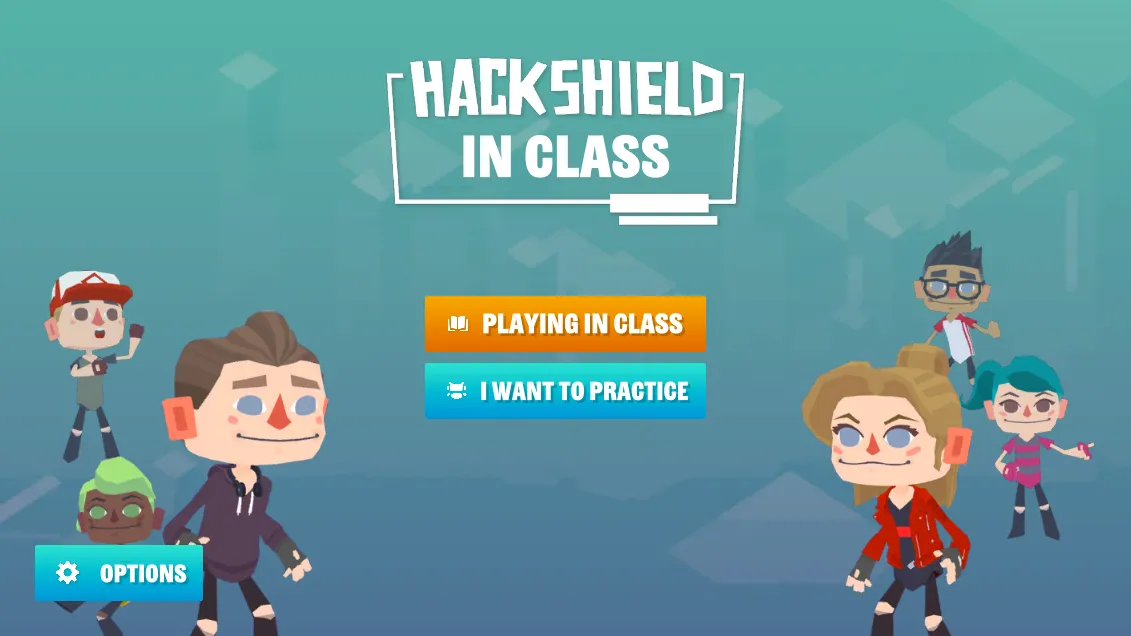
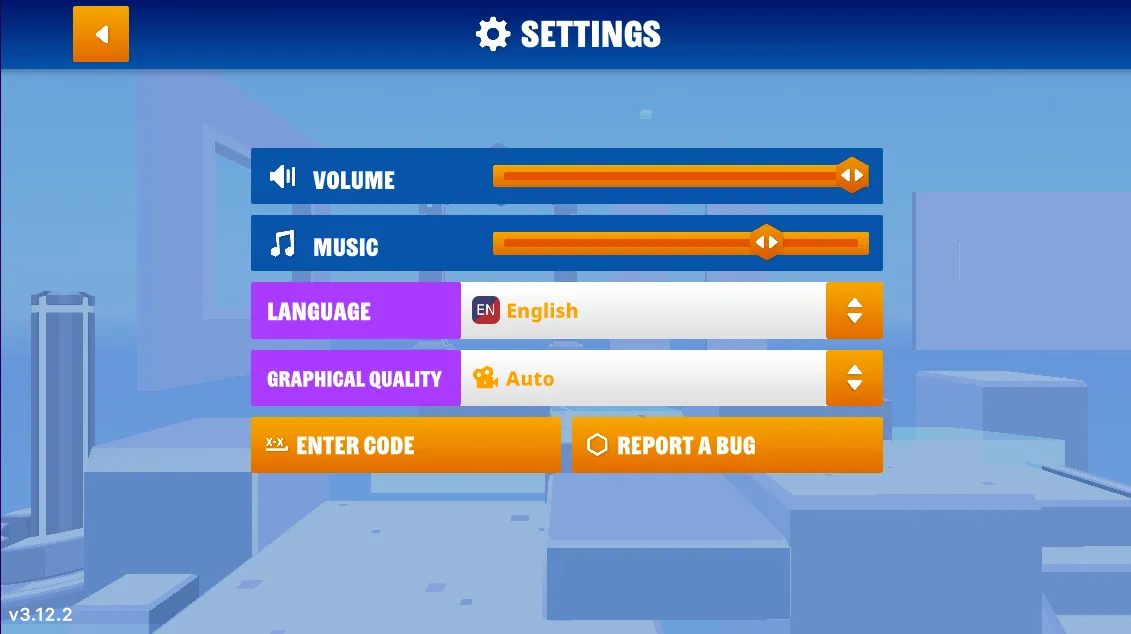
- If you prefer a silent quest, you have the option to turn off the sound. Simply navigate to the game's options menu, and you'll find the accompanying images on the right.
- Now, let's dive into the heart of our quest! Navigate to the game’s options menu where you can turn off the music.
Learn more
Videos are coming soon
Appendix
Puzzle 1

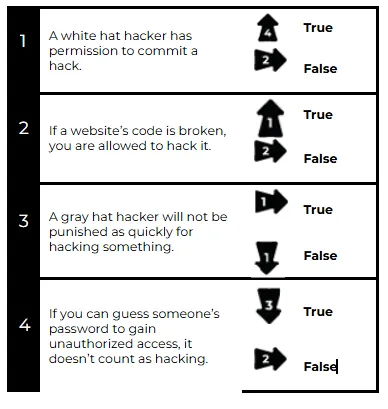
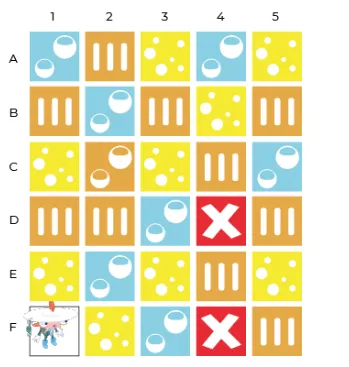
Help Koi though the maze. Write down the color. Koi ends up on at each step. After four steps you have a handshake with which you can take over a satellite!
Answer
- True Koi takes four steps upwards Orange
- False Koi takes two steps to the right Orange
- False Koi takes one step downwards Yellow
- False Koi takes two steps to the right Blue
So, fill in:
Orange – Orange – Yellow – Blue
Puzzle 2

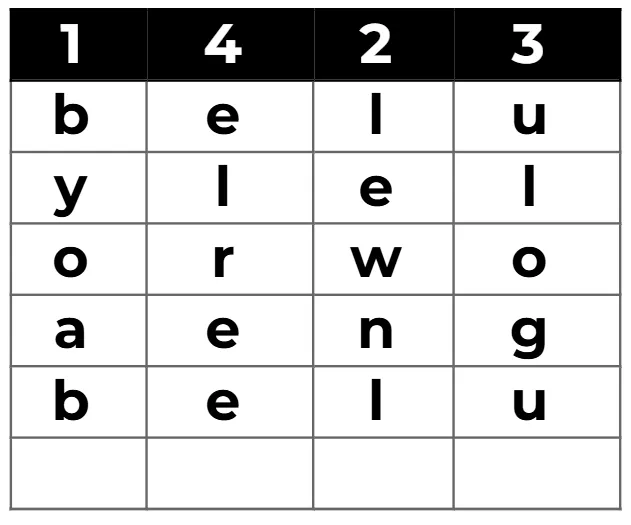
Which words are in this table? The answer is a handshake that will allow us to take over another satellite!
Answer
How to solve this puzzle:
- Look at the table: The table contains rows of letters in columns 1, 2, 3 & 4. The numbers determine the order in which the columns should be read.
- You must read the columns in order: 1, 2, 3, 4 (the numbers above the columns indicate this).
- So 1 is B, 2 is L, 3 is U, 4 is E and 1 is Y again, etc.
- Read the words: Combine the letters from the rows in the order shown. Do this for each row.
So you have to fill in:
Blue - Yellow - Orange - Blue
Puzzle 3

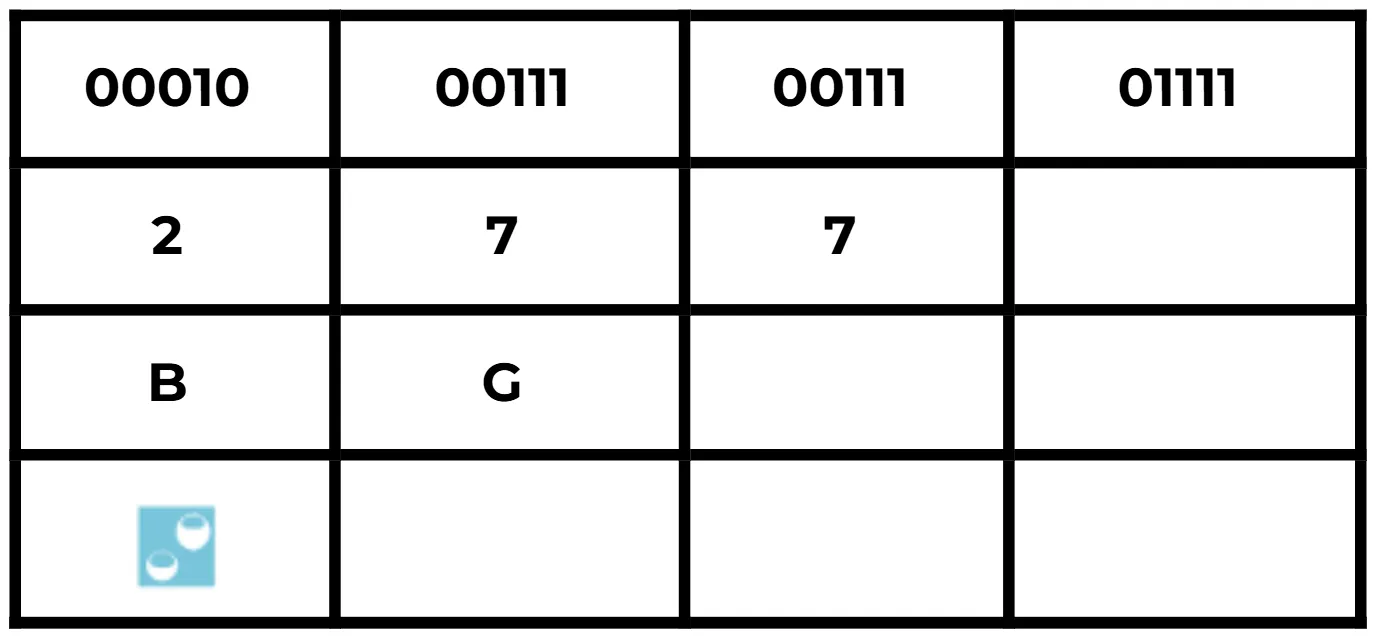
Below are four answers. We don’t know everything. What is the fourth color? Use the complete answers to find out what the missing answers are.
Answer
How to solve this puzzle:
Step 1: Converting Binary Numbers to Decimal Numbers
We translate the binary numbers in the table into decimal numbers to see what they represent.
- 00010 = 2
- 11001= 25
- 11001 = 25
- 01111= 15
Step 2: Find patterns and logic
Link the numbers you found to the letters of the alphabet.
- 2 = B
- 25 = Y
- 25 = Y
- 15 = 0
Puzzle 4
Answer:
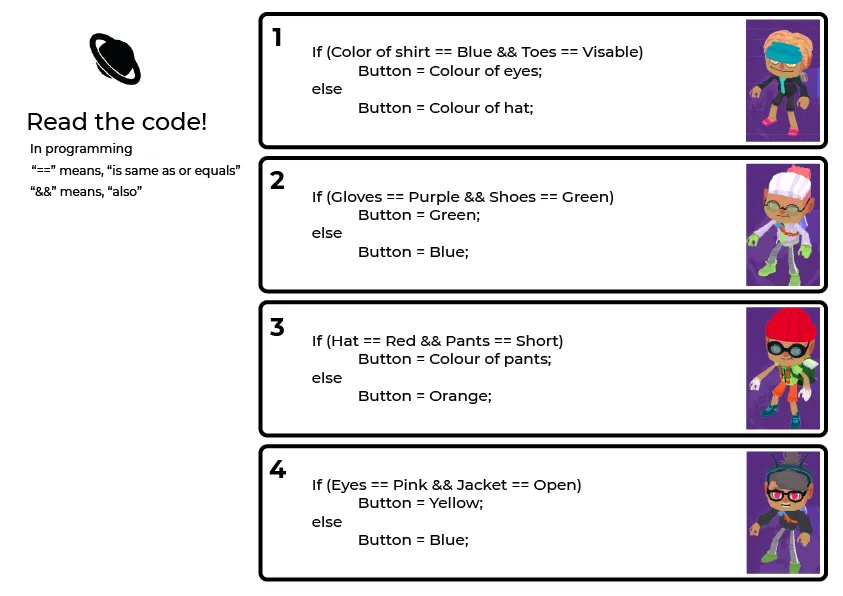
yellow-blue-orange-blue